What refund requests tell you about your product
Refund requests are the most honest feedback you get. How to read them, what patterns to look for, and how to hear the same things earlier.
Short answer: a refund request is someone telling you the product didn’t do what they paid for. Track the reason for every request, look for patterns by plan, timing and source, and fix the expectation or the product. Then ask the same question earlier, while people can still be helped.
Record every request the same way
| Field | Example |
|---|---|
| Days since purchase | 2 |
| Plan or product | Yearly |
| Reason in their words | “Didn’t realise it renewed automatically” |
| Category | Billing surprise |
| Could it have been prevented? | Yes: clearer renewal reminder |
Patterns and what they mean
| Pattern | Likely cause | What to change |
|---|---|---|
| Within hours of buying | Expectation mismatch | Clearer page, a trial, or a demo of the main result |
| Right after renewal | Forgotten subscription | A reminder before renewal |
| After a specific bug | Product failure | Fix it and contact others affected |
| From one ad or channel | Wrong audience | Change the targeting or the message |
| “Doesn’t do X” | Missing feature or unclear limits | State limits plainly before purchase |
In our review sample, 11% of problem reviews mentioned payment or subscriptions. Many of those people would have asked for a refund if they knew how.
Hear it before they ask for money back
- Ask a short question in the first days after purchase: “Is it doing what you hoped?”
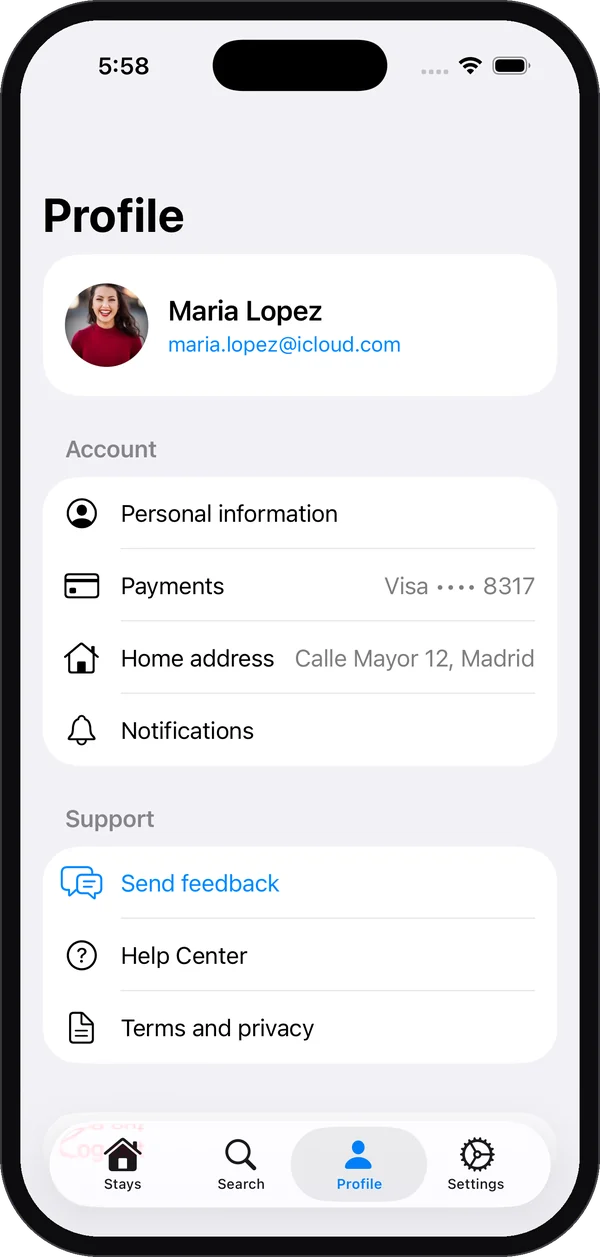
- Put a feedback option on the screens where people get stuck after paying.
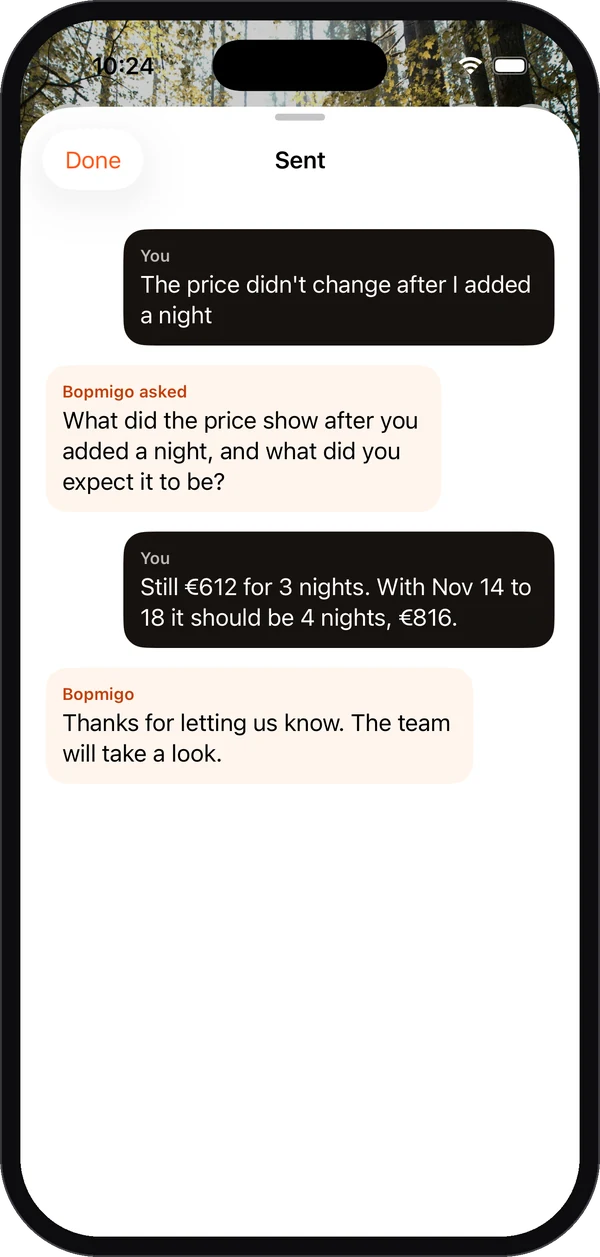
- Reply personally. Some refund requests turn into “never mind, that fixed it”.
A short refund conversation
- 1
Process it kindly
Make refunds easy. A hard refund turns into a chargeback or a public review.
- 2
Ask one question
“Thanks, the refund is on its way. So we can improve, what made it not right for you?” Keep it optional.
- 3
Offer help if it fits
If the reason is a fixable problem, offer to fix it. Some people would rather stay.
- 4
Record the reason
Add it to your sheet the same day, in their words.
Monthly review
- Count reasons by category, and compare with last month.
- Look for one category that grew: that is your fix for this month.
- Check whether requests cluster around a release, a price change or a campaign.
- Share the top reasons with whoever writes your website and onboarding.
Prevent the most common ones
| Reason | Prevention |
|---|---|
| Forgot it renewed | An email a few days before renewal, with a clear way to cancel |
| Didn’t do what I expected | A clearer page, screenshots of the real product, a free trial |
| Too hard to set up | Guided setup, or an offer to help in the first days |
| A bug stopped me | A way to report from inside the product, and a quick reply |
Refunds by product type
| Product | Typical reasons | Where to look first |
|---|---|---|
| Mobile subscription | Forgot to cancel the trial, didn’t see value, bug on a specific device | Trial reminders, first-week experience, device-specific reports |
| SaaS plan | Too hard to set up, missing an integration, bought the wrong plan | Setup help, plan comparison, pricing page clarity |
| One-time purchase or course | Content not what was expected, technical access problems | Sales page accuracy, access and login flow |
| Physical product online | Delivery problems, wrong size or colour, damaged item | Delivery communication, product details, packaging |
Questions to ask after a refund
- “What were you hoping it would do?”
- “What made you decide it wasn’t right?”
- “Is there anything that would have changed your mind?”
- “Where did you first hear about us?” (it shows which channels bring the wrong buyers)
Ask one, maybe two. People who just asked for their money back don’t want a survey.
When refunds are a good sign
A few refunds are normal and healthy: they mean people trusted you enough to buy. Worry when the rate climbs, when one reason dominates, or when refunds cluster around a change you made. Those are the signals that something in the product or the promise needs to change.
A worked example
A note-taking app sees refund requests rise after moving to yearly billing by default. Most say “didn’t realise it was a year”. Changing the checkout to show the monthly option first, and sending a reminder a week before renewal, brings requests back down. Nothing about the product changed; only what people understood they were buying.
Questions to ask about your own refunds
- What share of refunds happen within a day of purchase?
- Which reason has grown the most in the last three months?
- Do refund requests cluster around a release or a price change?
- Did any refunded customer report a problem before asking for their money back?
Should I make refunds hard to discourage them?
No. Hard refunds become chargebacks and public complaints. Easy refunds with a kind question teach you more.
What refund rate is normal?
It varies by product and price. Watch your own trend and the reasons more than any benchmark.
A renewal reminder that prevents refunds
Send it a week before a yearly renewal, from a person, in plain text:
Subject: Your yearly plan renews on December 3

Hi Sam,

Your plan renews on December 3 for $180. Nothing to do if you'd like to keep it.

If you'd rather switch to monthly or cancel, you can do it here: [link]

If something isn't working for you, reply and tell me. I read every reply.

Alex
It cuts “I forgot it renewed” refunds, and the replies tell you what people would change.
Refund reasons worth tracking
- Billing surprise (renewal, plan, price)
- Didn’t do what I expected
- Too hard to get started
- A specific bug
- Missing a feature
- No longer needed
How Bopmigo helps
Customers can tell you what’s not working from inside your app or website the moment it happens, with the screen and details attached, and you can reply right there. Problems get fixed while they are still small enough not to need a refund.