Make money from free app users without annoying them
People pay in free apps when the purchase makes something they already enjoy better. How to choose between subscriptions, one-time unlocks, in-app purchases and ads, when to show an offer, and how to find out why most people never buy.
Short answer: people don’t mind paying in a free app. They mind being interrupted, pressured or made to feel the free version is broken. Sell things that make an experience they already enjoy better, such as extra features, more of something they use, or ways to personalise it. Show offers after a good moment rather than in the first minutes, and keep the free app complete. Then ask non-paying regulars what would make a purchase worth it.
What “annoying” usually means
- Interrupting. A full-screen offer while someone is in the middle of something.
- Too early. A paywall before the person knows whether they like the app.
- Pressure. Countdown timers that reset, “only 2 left”, guilt-trip buttons such as “No, I don’t want to look good”.
- Confusing prices. Currency bundles where nobody can tell what anything really costs.
- Pay to win. Paying users getting an unfair advantage over everyone else, which drives away the free users who make the app worth paying for.
Pick a model that fits how people use the app
| Model | Works best when | Watch out for |
|---|---|---|
| In-app currency and items | Games and social apps where people personalise or show off: avatars, themes, gifts | Unclear currency value; spending by younger users |
| Subscription | There is ongoing value: more storage, features, an ad-free version | Charging before people reach the core value |
| One-time unlock | A clear upgrade people want once: a pro tool, a pack | Few repeat purchases |
| Tips and gifts | Users create things others enjoy | Needs active creators and an audience |
| Ads | Large daily use, short sessions | Hurts retention when ads interrupt the core action |
Look at what already sells before adding a new model. A habit app whose few buyers all pay for one feature should build more like it. A social app where people buy profile themes should make more of those. Doubling down on what people already choose to buy usually beats adding a subscription for the sake of it.
If you sell in-app currency, keep it fair and clear
- Keep bundle prices easy to compare. Show how much currency each one gives, and keep the steps simple.
- Let people earn some currency for free by using the app. It teaches what currency is for and makes the first purchase feel smaller.
- Price items so a small bundle buys something nice. Leftover currency that can’t buy anything feels like a trick.
- If you sell random items, follow each store’s rules. The App Store requires apps to show the odds of each item before purchase.
- Show a clear history of purchases and spending in settings.
Time the offer
The best moment to suggest a purchase is right after the person has enjoyed something: a profile got lots of reactions, they finished a level, they used a feature three times. Usually the worst moments are the first minutes, right after an error, and the middle of a task. A good starting rule to test in your own app: no offers until someone has come back on a second day. Try it against showing offers earlier, and compare both purchases and retention.
| Moment | Offer |
|---|---|
| Their post got lots of reactions | “Stand out more: new profile themes” |
| They hit a free limit they keep hitting | “Unlock unlimited, or keep using the free version” |
| A friend sent them a gift | “Send one back” |
| They’ve been active for a week | A one-time starter bundle at a friendly price |
Expect a small share to pay, and learn from them
In most free apps only a small share of people ever buy anything, and a small part of those make most purchases. That is normal. Look at what payers did in their first week: which features they used, how many days they were active, whether they had friends in the app. Usually the people who pay are the people who already stayed. Better retention is often the fastest way to more revenue.
Ask regulars who never pay
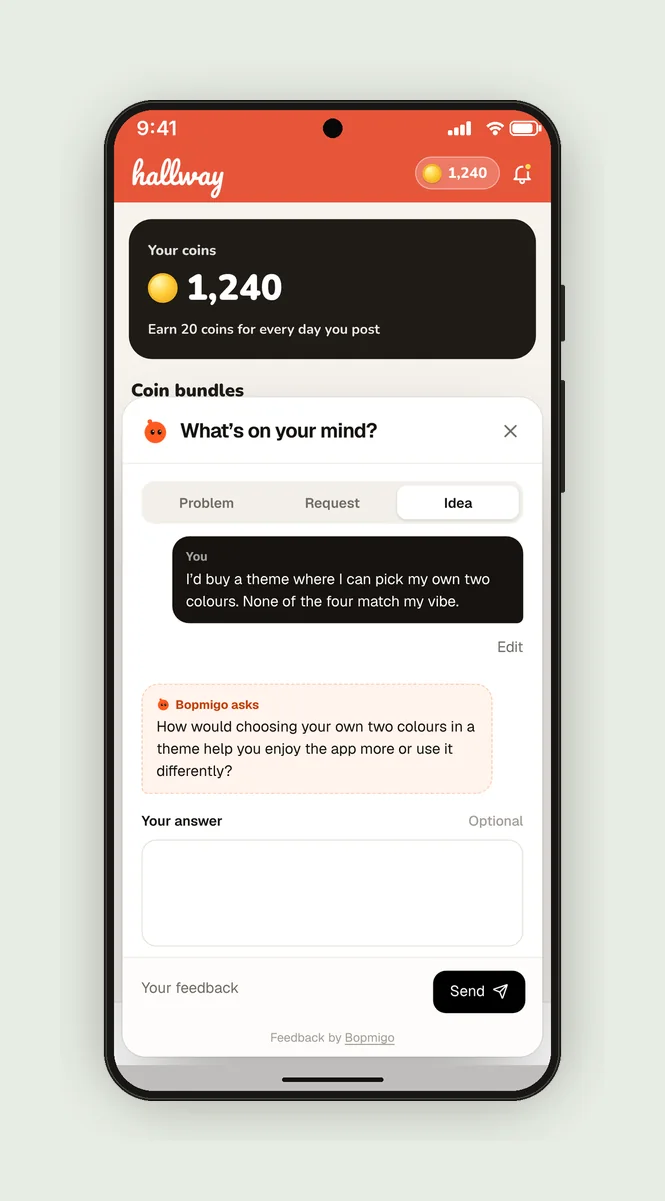
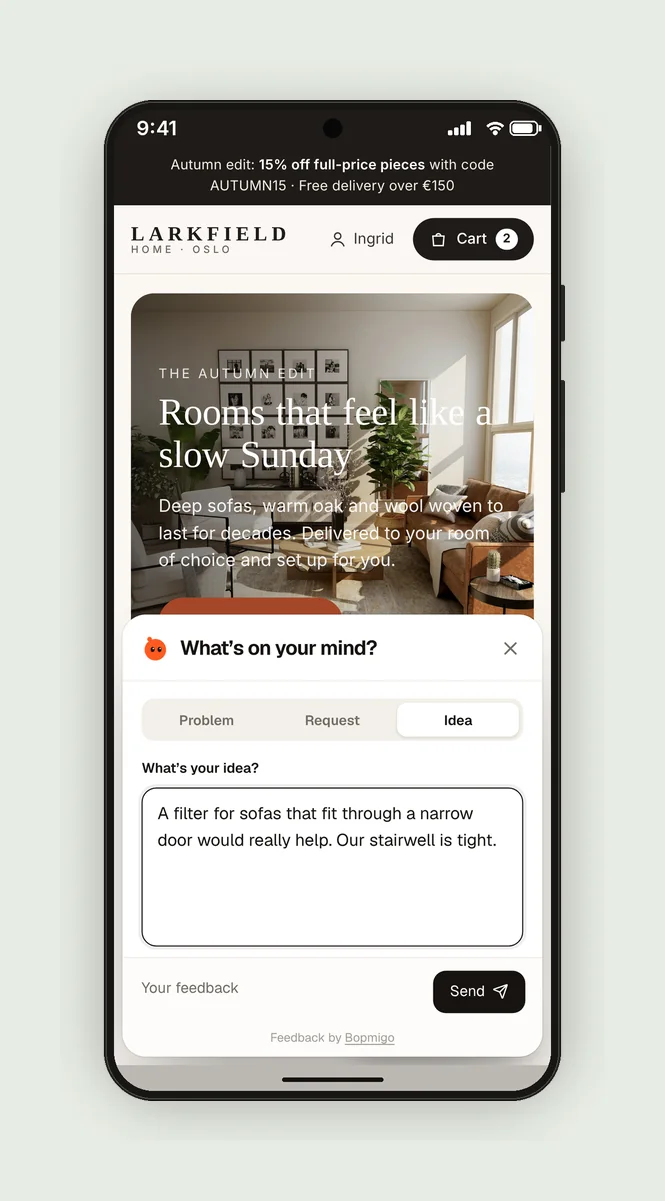
Your most active free users are the best guide to what would sell. Ask them, inside the app, a short question: “What would make something here worth buying for you?” or “Is there anything you’d pay to unlock?” Their answers often surprise teams: people ask for things that are cheap to build, such as new colours or a way to customise one screen, and ignore the expensive feature planned for paying users.
Measure what matters after you change something
| Measure | Why it matters |
|---|---|
| Share of week-one users who make a first purchase | Shows whether offers reach people at a good moment |
| Share of first-time buyers who buy again within 30 days | Shows whether the first purchase felt worth it |
| Refund requests and purchase complaints | Rises quickly when prices confuse or pressure people |
| Day 30 retention of buyers and non-buyers | If offers push non-buyers away, this falls |
Change one thing at a time: the moment an offer appears, a price, a new item or feature. Compare two weeks of new users before and after. If revenue rises and Day 30 retention of non-buyers holds, the change is a good one.
A first offer that feels like a gift
Many apps do well with a single starter bundle, offered once, after someone has been active for a few days. Make it clearly good value, explain what it includes in plain words, and never show it again after it is dismissed. A first purchase that feels generous makes the second one far more likely, and a dismissed offer that keeps coming back is one of the fastest ways to make an app feel pushy.
If some of your users are young
If teenagers use your app, design purchases they and their parents will feel fine about. Show real prices, avoid pressure tactics, make refunds easy to find, and support family purchase approval on each platform. Complaints from parents about unexpected spending lead to refunds, bad reviews and lost trust.
Mistakes to avoid
- Putting the core feature behind a paywall before people know they like it.
- Showing an offer on every launch.
- Copying a subscription model from apps your users don’t use.
- Running a sale that makes earlier buyers feel cheated.
- Changing prices without telling people who already bought currency.
Questions to ask yourself
- What do people do in the app that they would want to look better, last longer or go further?
- When was the last time an offer appeared at a bad moment?
- Can a new user tell what a bundle of currency actually buys?
- What did your paying users do in their first week that others didn’t?
- Have you asked your most active free users what they would pay for?
Common questions
Should I add ads to make more money?
Only if they don’t interrupt the core action. Optional rewarded ads, where someone chooses to watch one for a reward, are usually far less annoying than ads that appear by themselves.
Is a subscription better than one-off purchases?
Not by default. Subscriptions suit ongoing value. If people already buy one-off items happily, a subscription may add friction without adding revenue.
When should the first offer appear?
After someone has come back on a second day and enjoyed something. Not on first launch.
How do I find out why people don’t buy?
Ask active free users directly, inside the app, and read the answers together. Patterns show up after a few dozen replies.
More on this: why free users never upgrade, asking users why they didn’t pay, and how to improve social app retention.
How Bopmigo helps
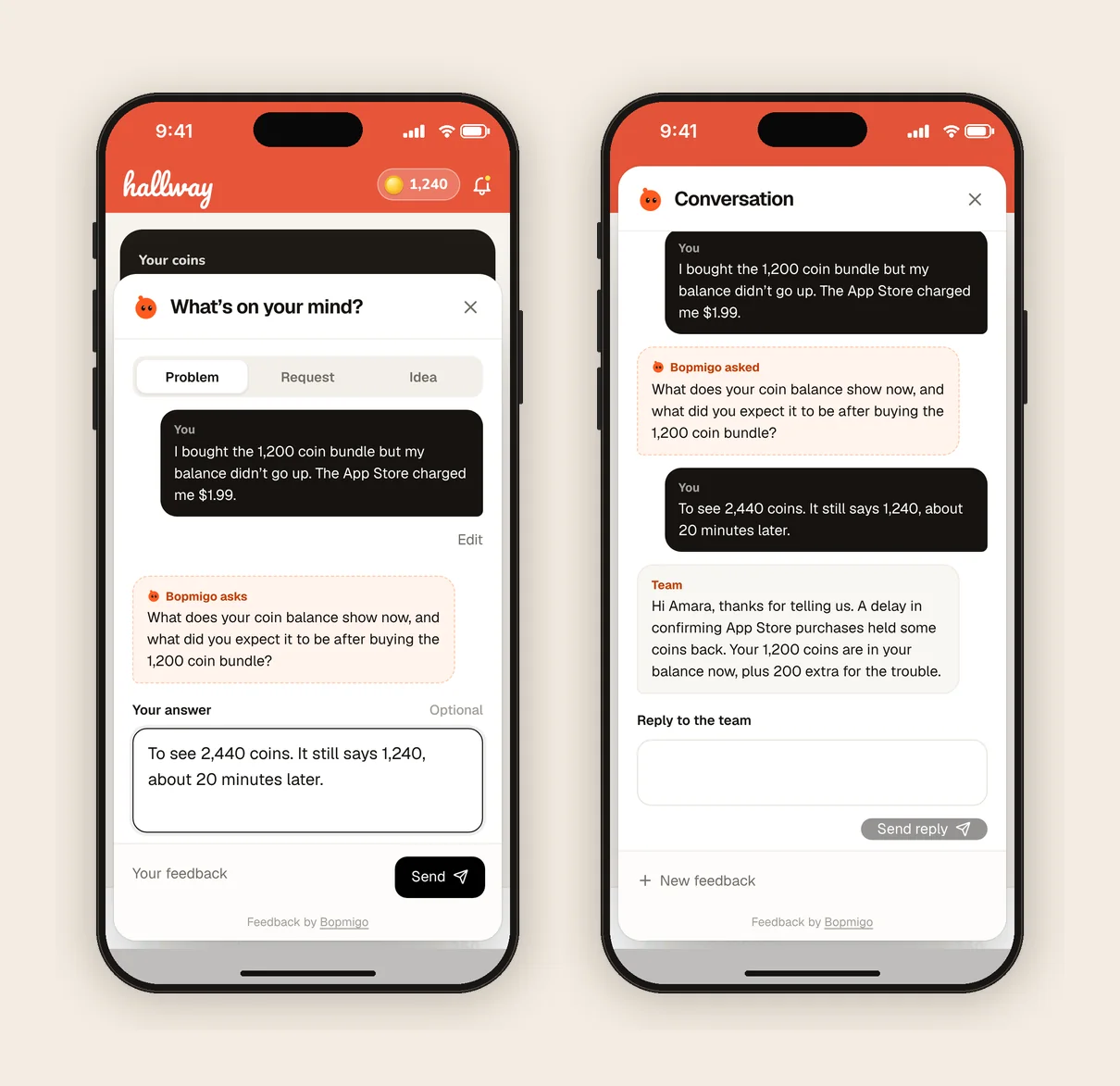
Bopmigo lets your users tell you, in a sentence and inside the app, what they would pay for and what put them off. Each answer arrives with the screen it was sent from, so you know whether it came from the shop, a profile or a paywall. Similar answers are grouped, and you can reply in the app to say what you’re adding.