Free users who never upgrade: is your free plan too good, or not good enough?
A free plan can bring users who never pay. How to tell whether they never reach the paid features, never need them, or don’t trust the upgrade, and what to change.
Short answer: free users stay free when the free plan already covers what they need, when they never reach the point where paying helps, or when the upgrade isn’t clear or trusted. Find out which by looking at how much free users actually use, and by asking active free users what would make paying worth it. Then adjust the line between free and paid around a limit people actually hit. This guide is for free plans that never expire. For time-limited trials, see why trial users don’t convert.
Founders in our research described both sides: one made every tool free with no sign-up and wondered whether it was a mistake; another had over 10,000 free downloads before earning a first dollar. Free brings attention. It only brings revenue when the line between free and paid is in the right place.
Three kinds of free users
| Who | What you’ll see | What to do |
|---|---|---|
| Satisfied with free | Regular use, never near a limit | Move a valued feature or limit to paid, carefully |
| Never got value | Little use after sign-up | Fix onboarding; they won’t pay for something they don’t use |
| Would pay, but don’t | Hit limits, see the paywall, leave | Clarify price and plans; ask what’s stopping them |
Put the line where it makes sense
- Charge for what grows with the value someone gets: more projects, more reports, more teammates, more storage.
- Keep enough free that people can see the product work for them.
- Make limits visible before people hit them, not as a surprise.
- When you change the free plan, tell existing users clearly and early.
Ask your most active free users
Active free users are your best source of upgrade ideas. They clearly value the product; they just don’t see a reason to pay. Ask them directly: “What would make a paid plan worth it for you?” Their answers show you which features or limits to build around.
Common free-plan mistakes
- Unlimited core usage for free. If the main thing people come for has no limit, few need to pay.
- Limits on things people don’t care about. Paid features nobody misses won’t drive upgrades.
- Invisible limits. People hit a wall without warning and leave instead of upgrading.
- No reason to pay as they grow. If heavy users get the same value free as light users, the free plan is too generous for them.
- Free forever with no contact. If free users never hear from you, they never learn what paid offers.
Ways to draw the line
| Limit by | Fits when | Example |
|---|---|---|
| Usage | Value grows with how much people use it | Reports per month, exports, storage |
| Projects or seats | Teams and agencies grow into it | One project free, more on paid |
| Features | Some features matter mostly to serious users | Integrations, branding removal, history |
| Time | People need to experience it fully first | Full access for a trial period, then a free tier |
Changing the free plan without upsetting people
- 1
Explain why
Be honest: the product needs to sustain itself to keep improving.
- 2
Give notice
Tell existing users weeks before anything changes.
- 3
Protect early users
Consider keeping current users on their plan for a while, or offering them a discount.
- 4
Listen and adjust
Read every reply. If many people say the new limit is wrong, adjust it.
A worked example
A note-taking app has 10,000 free users and almost no paid ones. The free plan includes unlimited notes and sync; paid adds themes and export. Asking active free users what they’d pay for gets a clear pattern: “sharing notes with my team” and “more than one device”. The app moves sync across more than one device and sharing into the paid plan for new users, keeps existing users as they are for a year, and adds a clear note in the app explaining why. Upgrades rise because the paid plan now holds what people value, not extras they don’t miss.
Questions for active free users
- “What do you use {product} for most?”
- “What would you miss most if it disappeared?”
- “What would make a paid plan worth it?”
- “Have you ever hit a limit? What did you do?”
For free apps that earn from in-app purchases rather than plans: make money from free app users without annoying them.
How Bopmigo helps you listen to free users
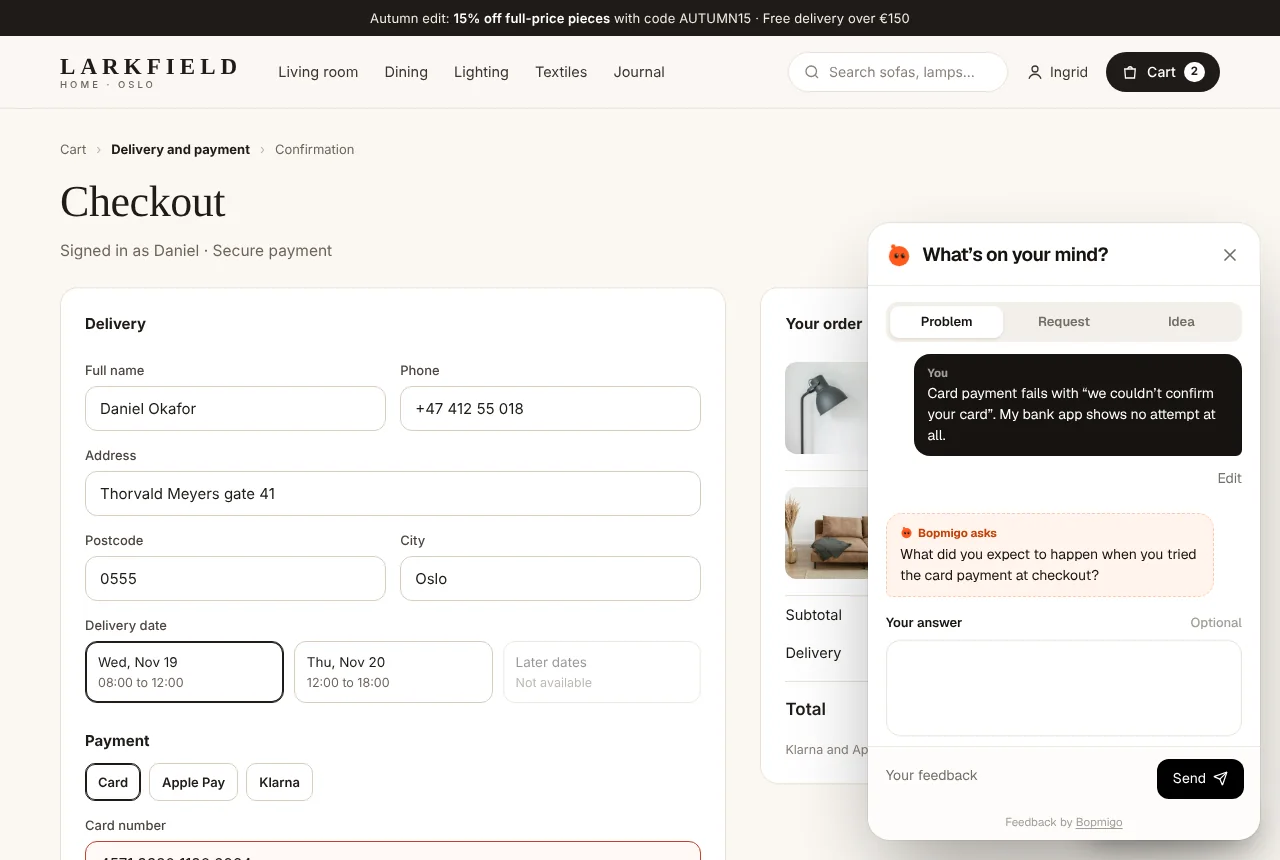
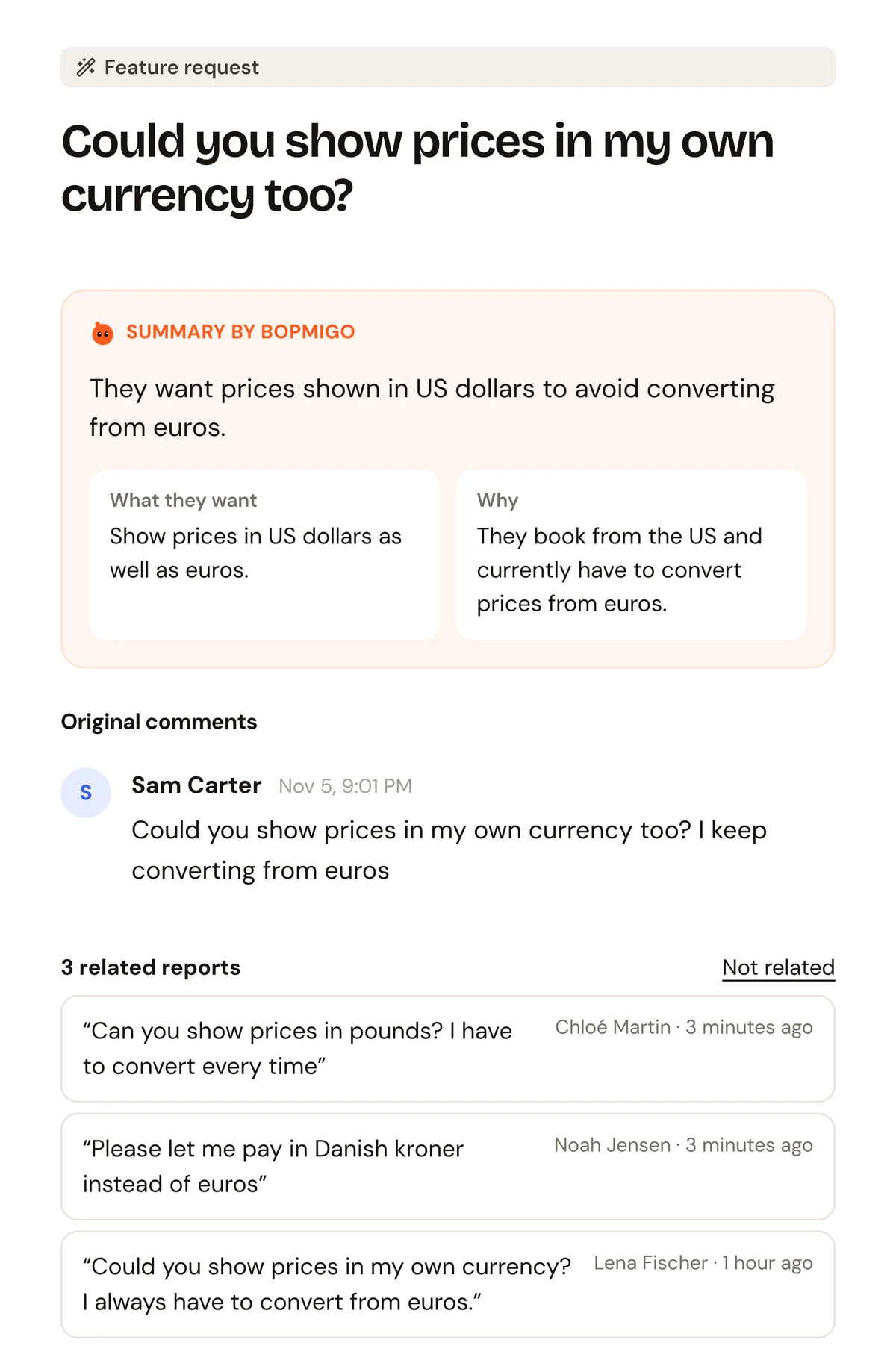
Bopmigo gives free and paying users the same simple way to tell you what they need from inside your product. Requests about the same thing are grouped and counted, so you can see which features many free users ask for, which is often exactly what belongs in a paid plan. You reply where they asked, and can tell them when it ships.