Reducing churn when you only have a handful of customers
With 10 or 50 customers, churn analytics are mostly noise. What works instead: talking to every customer, catching problems early, and fixing what made people leave.
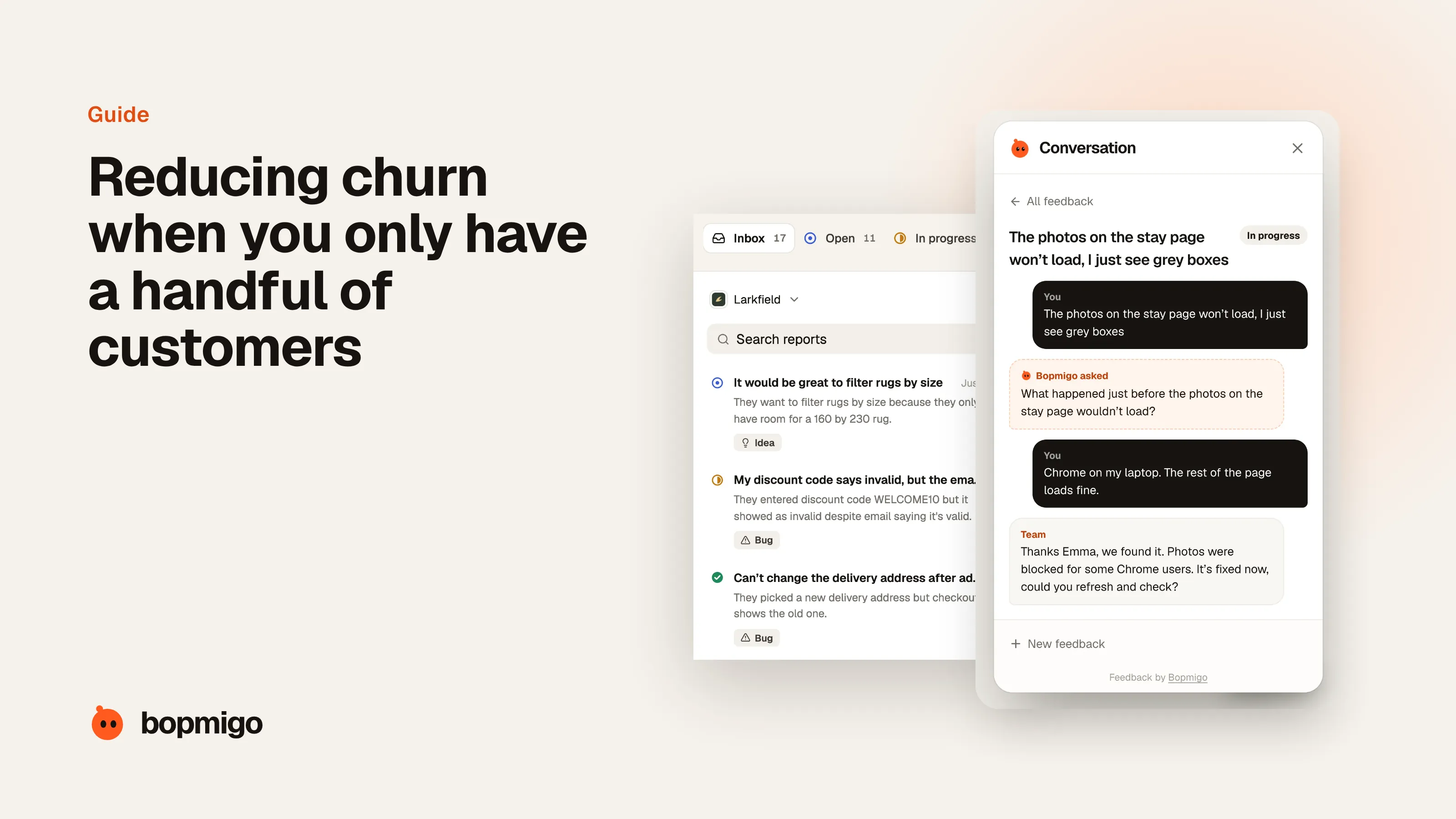
Short answer: with a small customer base, treat churn as individual stories, not a percentage. Know every customer by name, give them an easy way to tell you when something is wrong, reply fast, and write down the real reason each person left. Two or three of those reasons usually explain most of your churn, and they are fixable.
Founders at this stage often post numbers like “~40 new customers a month and ~20% churn” and then realise growth will stall at a fixed size, because new customers only replace the ones leaving. At small scale, keeping one more customer a month matters as much as winning one.
Why churn dashboards don’t help yet
- A churn rate on 20 customers swings wildly when one person leaves.
- Cohorts are too small to compare.
- Prediction models need far more data than you have.
- The real reasons are in conversations, not charts.
The small-scale churn routine
- 1
Keep a simple customer list
Name, what they use the product for, when they last used it, anything they told you. A spreadsheet is enough.
- 2
Watch for quiet accounts
Anyone who hasn’t used the product for a week or two gets a short personal email. Ask what got in the way, not whether they want a discount.
- 3
Make reporting effortless
A feedback option inside the product, on every screen, so problems reach you before they become reasons to cancel.
- 4
Reply the same day
At this size, a fast human reply is your biggest advantage over bigger competitors.
- 5
Write down every cancellation reason
In their words. After ten, group them. Fix the biggest group first.
Common reasons small products lose customers
| Reason | What to try |
|---|---|
| They never got set up properly | Offer to set it up with them on a call, or do it for them |
| A bug they never reported | Make reporting a sentence long, inside the product |
| A missing feature | Ask how often they need it; sometimes a workaround keeps them |
| They only needed it once | Consider a one-time price or a yearly plan |
| Price felt high for what they used | Check whether they used the main feature at all |
Ask before they leave, not at the door
A cancellation survey catches the reason people give on the way out. Feedback during use catches the problem that caused it, weeks earlier. At small scale, you want both, but the second matters more.
Why churn matters so much at small scale
A simple way to see it: if you win 40 customers a month and lose 20% of your customers every month, your customer count stops growing at about 200, because at that size you lose 40 a month, as many as you win. Halve churn to 10% and the same sales effort levels off at around 400. At small scale, churn decides how big you can get, not just how fast.
| New customers a month | Monthly churn | Where growth levels off |
|---|---|---|
| 40 | 20% | About 200 customers |
| 40 | 10% | About 400 customers |
| 40 | 5% | About 800 customers |
It shows why one founder in our research said running these numbers “ruined my afternoon”. Each customer you keep is worth as much as one you win.
A weekly 30-minute routine
- Monday: check who hasn’t used the product in a week. Send each a personal note.
- Every day: reply to every report and question the same day.
- Friday: read the week’s reports and cancellation reasons. Add them to your list of reasons in their words.
- Monthly: group the reasons. Pick the biggest group and fix it. Tell everyone who mentioned it.
What not to do yet
- Don’t buy a churn analytics tool before you have a few hundred customers.
- Don’t lead with discounts. They hide the real reason and train people to threaten to cancel.
- Don’t send automated “we miss you” sequences without reading replies. A person replying matters more than the sequence.
A worked example
A scheduling tool for small clinics has 30 paying customers and loses three a month. The founder writes down each reason, in the customer’s words, for three months:
| Reason given | Count |
|---|---|
| “Our receptionist couldn’t work out the calendar view” | 4 |
| “Reminders didn’t go out a few times” | 3 |
| “Too expensive for how much we use it” | 1 |
| “We closed the second location” | 1 |
Seven of nine reasons are the calendar view and unreliable reminders, both fixable. None would have shown up in a churn chart. After a clearer calendar and a fix for reminders, plus an easy way for receptionists to report problems from inside the tool, the clinic loses one customer the following month instead of three.
Talk to customers who stay, too
Ask your happiest customers what nearly made them leave in the first month. They often describe the same problems that made others cancel, but they pushed through. Their answers are a ready list of things to fix.
How Bopmigo helps a small team keep customers
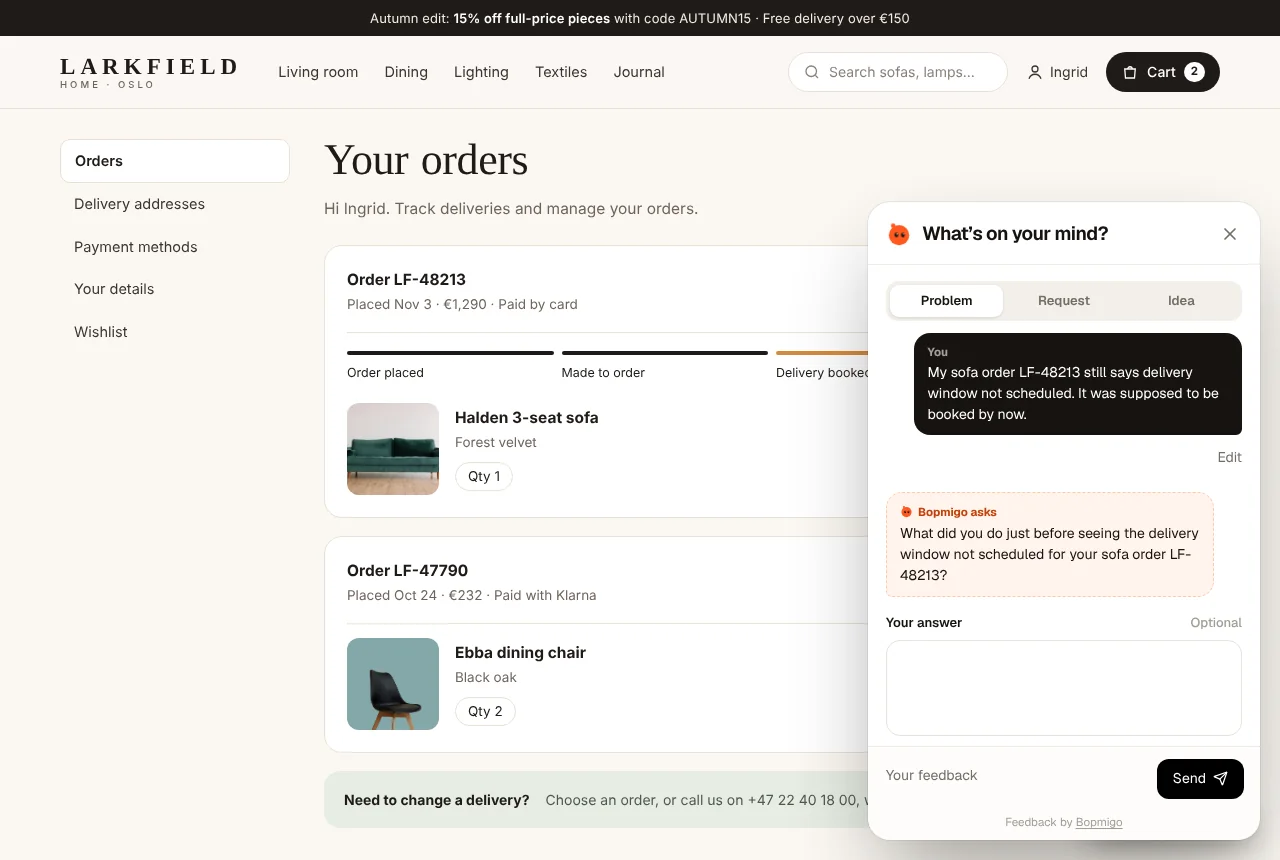
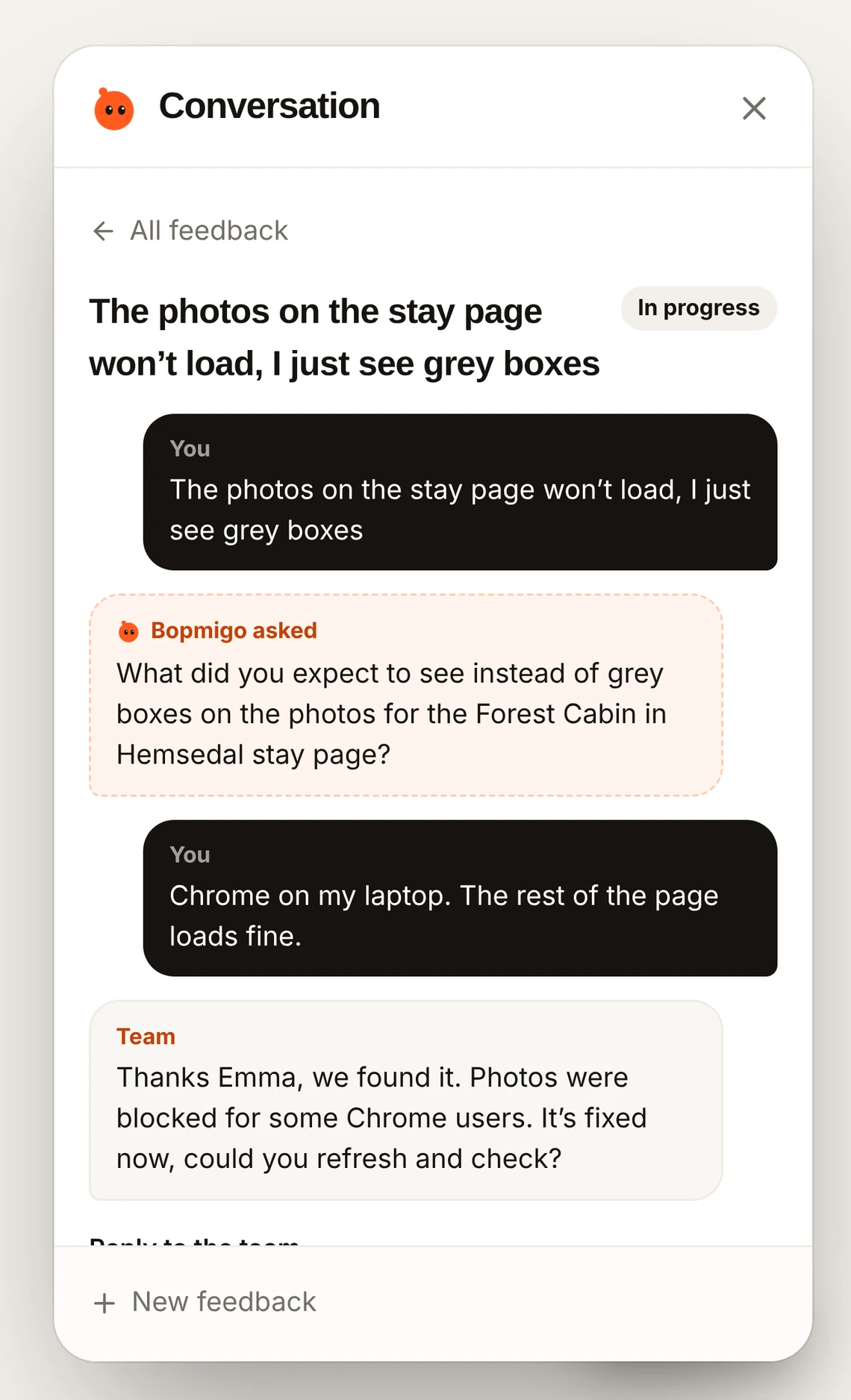
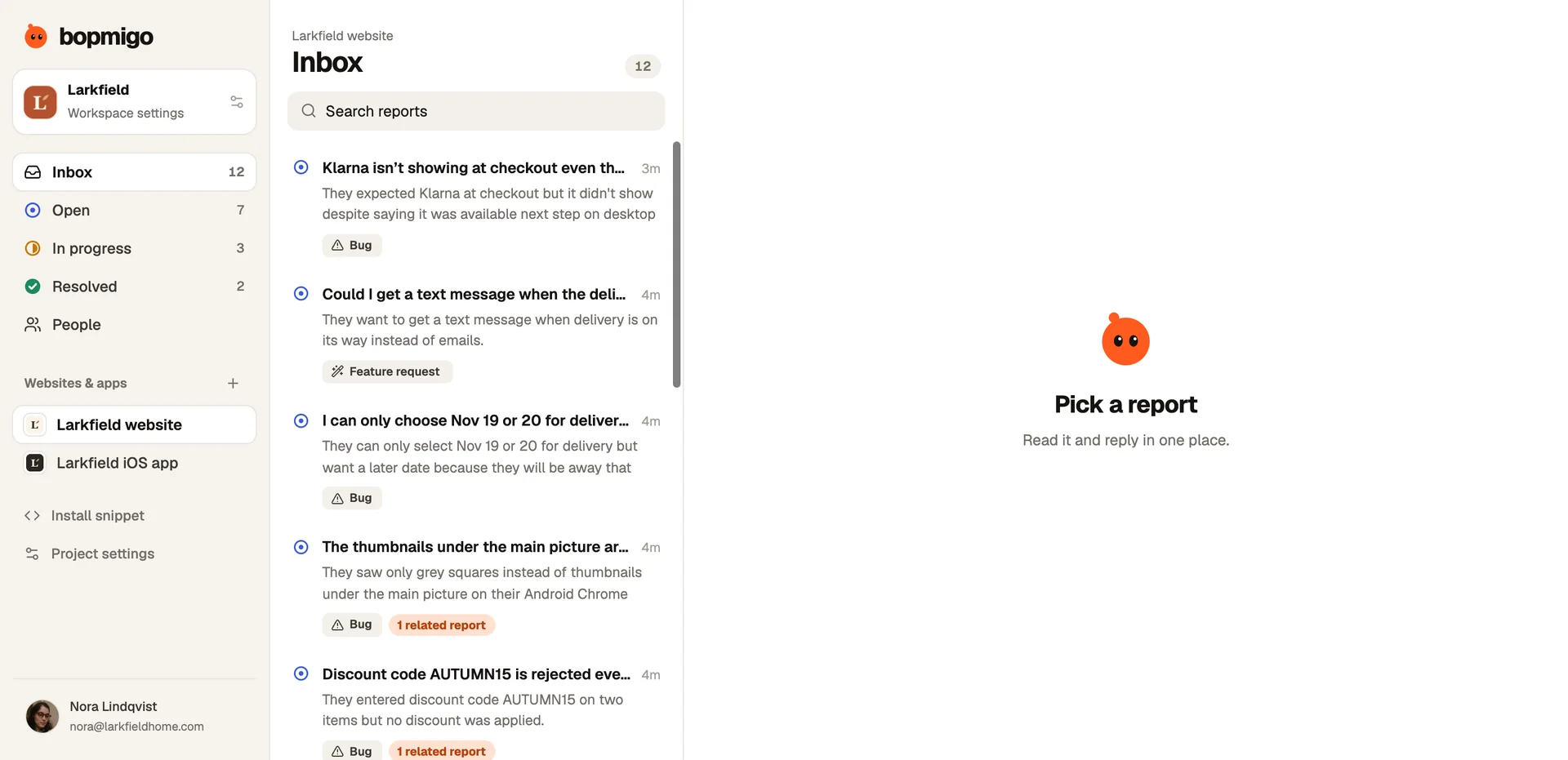
Bopmigo gives every customer a way to tell you about a problem from inside your product, in a sentence, with the screen and device included. You get it in your inbox or by email, reply right there, and the customer sees your answer where they reported. Requests about the same thing are grouped, so you can see when several customers want the same fix.
Should I offer discounts to people who cancel?
Occasionally it helps, but at small scale the reason they’re leaving is more valuable than the few dollars you keep. Ask first.
How often should I contact customers?
Only when you have a reason: they went quiet, they reported something, or you shipped what they asked for.