Plenty of sign-ups, no paying customers: where to look first
Hundreds of sign-ups and zero revenue is common for new products. A step-by-step way to find whether the problem is the audience, the first session, the product or the price.
Short answer: work backwards through the path from sign-up to payment and find the first step most people don’t complete. If people don’t use the product after signing up, it’s a first-session or audience problem. If they use it but don’t pay, it’s a value, plan or price problem. Then talk to people at that step. Changing ads or price before you know where people stop usually wastes money. This guide looks at the whole path, from who signs up to who pays. If people get value during a time-limited trial and still don’t pay, see why trial users don’t convert. For a free plan that rarely upgrades, see why free users never upgrade.
This was one of the most common situations in the founder posts we read: “421 users, only 5 sales”, “220 sign-ups, 0 paying users”, “900 installs, 6 paying users”, “127 users paid me $0”. Every one of those founders had proven people were interested. The question was where interest turned into silence.
Walk the path
| Step | If most people stop here | Likely problem |
|---|---|---|
| Sign up → first use | They sign up and never do anything | Audience, or the first screen |
| First use → main result | They try but never get the result | Onboarding, setup, bugs |
| Main result → return visit | They get it once and don’t come back | Not valuable enough to repeat |
| Regular use → see the paywall | They never hit a limit | Free plan gives away too much |
| Paywall → payment | They see the price and leave | Price, plan or trust |
Check the audience
Where did the sign-ups come from? A launch post, a giveaway or a list of “free tools” brings curious people, not buyers. Compare the few who paid with the many who didn’t: what did they search for, which page did they land on, what did they say at sign-up?
Talk to people at the step where they stop
- For people who never used it: a short email asking what they hoped to do.
- For people who tried and stopped: a feedback option inside the product, and an email asking what got in the way.
- For people who use it but don’t pay: ask what would make it worth paying for.
- For the few who paid: ask what convinced them. Use their words on your landing page.
Common fixes
- Narrow the audience. Sign-ups from the right people beat more sign-ups.
- Help the first users personally to reach the main result.
- Move the paywall to where value is clear, not before and not never.
- Offer a plan that fits how people actually use it (monthly, yearly or one-time).
A worked example
Take an app with 900 installs and 6 paying users, a pattern one founder in our research described. Working through the path:
- Installs to first use: 700 of 900 opened the app and finished onboarding. Fine.
- First use to main result: 250 of 700 used the main feature. So 450 people didn’t. That’s the biggest leak.
- Main result to return: 120 of 250 came back in the first week.
- Return to paywall: 40 of 120 hit a limit.
- Paywall to payment: 6 of 40 paid.
The paywall step looks bad in isolation, but the biggest number of lost people is earlier: 450 who never used the main feature. Improving that step even a little would bring more people to the paywall than any price change.
Questions to ask your few paying customers
- What were you trying to do when you found us?
- What almost stopped you from paying?
- What would you use if we disappeared?
- Who else do you know with the same problem?
Their answers tell you who your real customers are, which words to use on your landing page, and where to find more people like them.
What not to do yet
- Don’t buy more traffic until people who already signed up reach the main result.
- Don’t add features to win the people who left until you know why they left.
- Don’t compare yourself with numbers from other products. Track your own path week by week.
Signs your audience is the problem
- Most sign-ups came from a single launch post, giveaway or directory listing.
- People sign up and never complete a single action.
- Email replies say things like “just looking” or “for a school project”.
- Your few paying customers look very different from everyone else.
If that’s you, the fix is upstream: find more people like your paying customers, even if it means fewer sign-ups.
Signs the product is the problem
- People who clearly need it try it seriously, then stop.
- They report the same few problems or confusions.
- People who get past those problems tend to pay.
If that’s you, every problem fixed in the first session turns directly into more paying customers.
How Bopmigo helps
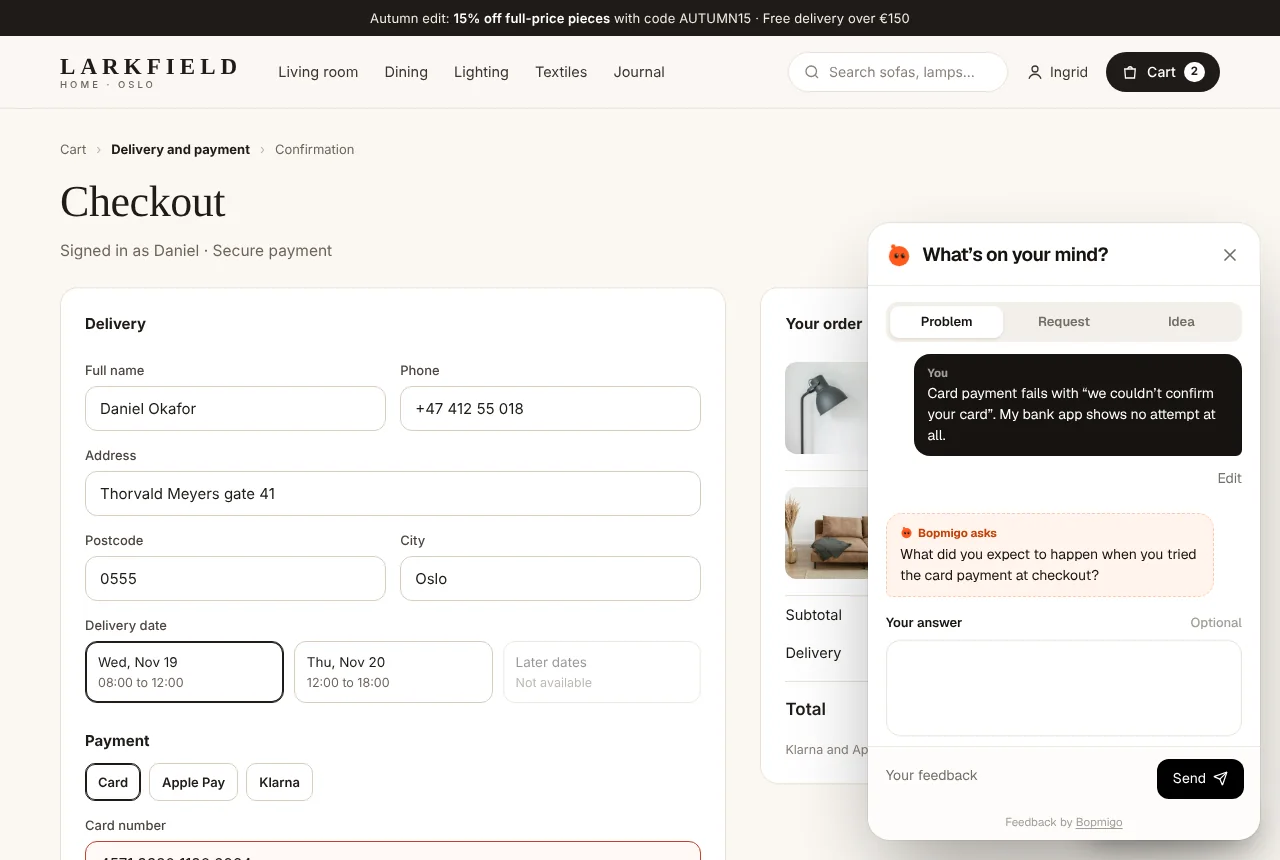
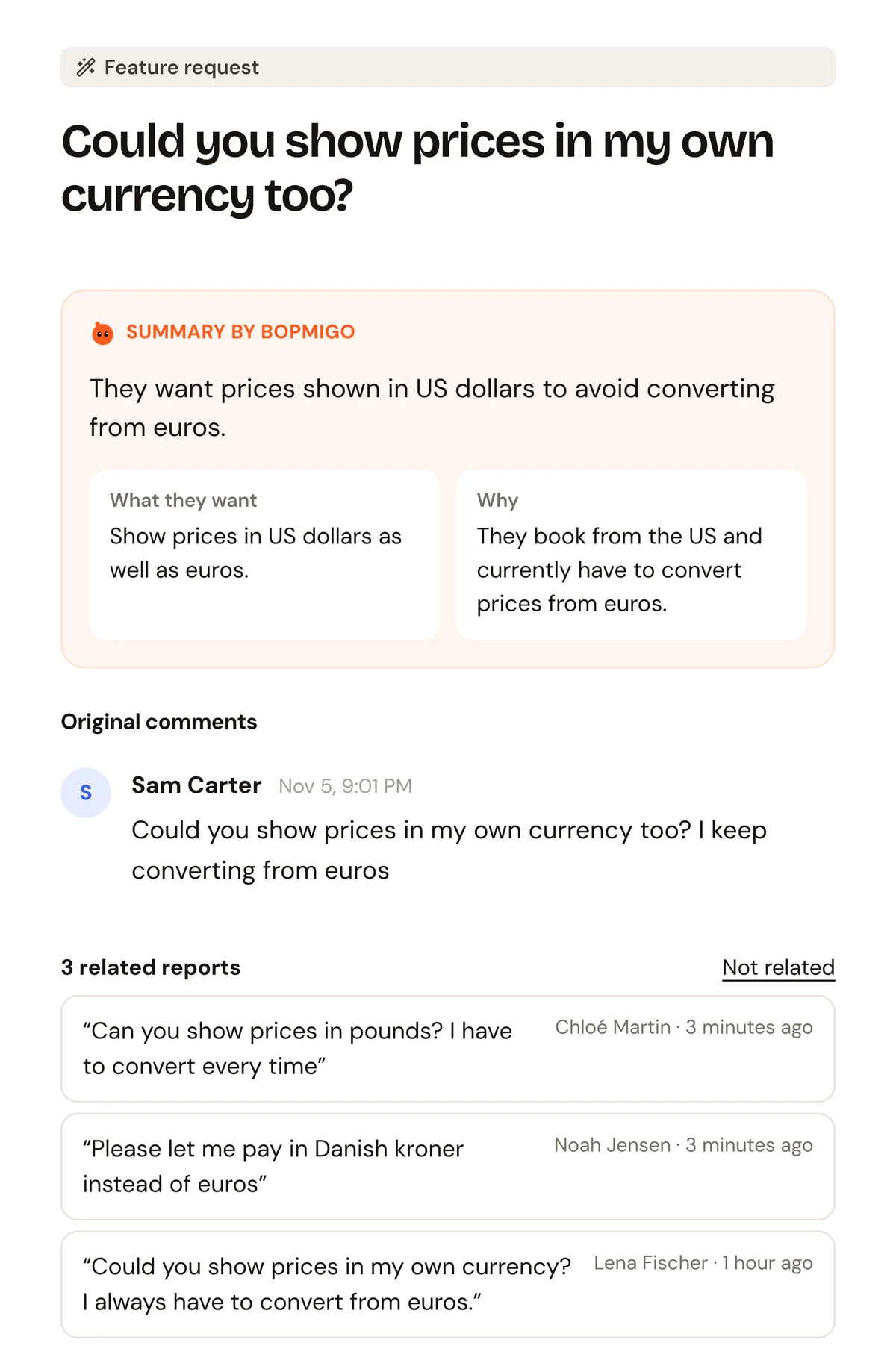
Bopmigo gives every signed-up user a way to tell you, from inside your product, what’s confusing, broken or missing, in a sentence. Reports arrive with the screen and device; similar reports are grouped and counted, so you can see what stops most people. You reply where they asked, which turns some silent sign-ups into conversations, and some conversations into customers.